
Who We Are
Our Team is Growing at the Helix Group LLC. Founded by Kazimierz Gozdz, Ph.D., The Helix Group pulls its expertise from a variety of fields that provide the depth and breadth of knowledge, skills and experience needed to offer its unique brand of services.
Our Team is Growing at the Helix Group LLC. Founded by Kazimierz Gozdz, Ph.D., The Helix Group pulls its expertise from a variety of fields that provide the depth and breadth of knowledge, skills and experience needed to offer its unique brand of services.
Founder and Senior Consultant
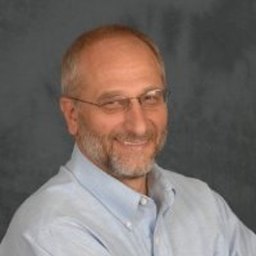
Kazimierz "Kaz" Gozdz, Ph.D.
Before creating The Helix Group, Kaz was a founding member of the Society for Organizational Learning (SoL), originally Peter Senge's MIT Center for Organizational Learning (OLC) where he started in 1994 as a Research intern, given latitude and encouragement to research and explore the emerging concept of learning organizations.
He was working on his Ph.D. in transpersonal psychology at the time, living in Menlo Park, CA, and commuting to Boston for his internship at the OLC.
Before arriving at the OLC, he had spent nearly a decade practicing with Scott Peck and others trained by him to lead individuals, groups and organizations through a set of community-building practices that facilitate groups to function at a higher developmental level integration than their cultural norm.
In the early through late 1990’s he worked with Michael Ray, then Professor of Creativity and Innovation and Marketing at Stanford’s Graduate School of Business, as a collaborator in designing and teaching the “New Paradigm in Business” class, which led to the publication of Creativity in Business by Michael Ray and Rochelle Myers.
Another contributor to his work was Willis Harman, a former Stanford engineering professor who was then the President of the Institute of Noetic Sciences, and also a member of the World Business Academy. Harman’s Center for Educational Policy Research and Center for the Study of Social Policy at SRI International had produced groundbreaking studies on the kinds of educational processes needed for long-term, sustainable economic and social systems. Haman's book, Global Mind Change, offered a clear understanding of the kind of paradigm shift we need.
Preferring applied research, Kaz comes from the pragmatist tradition, applying theory, testing it in real world situations, and validating truth claims through direct experience. He has a constructivist view and was trained as a practitioner to be anti-skeptical, believing it is best to proceed with some degree of confidence with what he’s come to know and shift his thinking as he discovers where he is wrong or the truth he is acting on is partial.
Kaz worked with The Decurion Corporation for a decade as the architect of their transformation into a developmental learning organization. After Decurion he has gone on to work with other large and small businesses. That work has been written up in numerous articles and the book An Everyone Culture by Robert Kegan and Lisa Lahey.
With Joseph Jaworski Kaz helped to develop the Generon International Practice Model, and was part of the dialogue that became the book, Source, the inner path to knowledge creation.
Recognizing that there is a fundamental need for understanding the role of community in human and organizational development, Kaz undertook the creation of a collaboration of researchers to explore the subject, publishing their results in the book Community Building: Renewing Spirit and Learning in Business
Before creating The Helix Group, Kaz was a founding member of the Society for Organizational Learning (SoL), originally Peter Senge's MIT Center for Organizational Learning (OLC) where he started in 1994 as a Research intern, given latitude and encouragement to research and explore the emerging concept of learning organizations.
He was working on his Ph.D. in transpersonal psychology at the time, living in Menlo Park, CA, and commuting to Boston for his internship at the OLC.
Before arriving at the OLC, he had spent nearly a decade practicing with Scott Peck and others trained by him to lead individuals, groups and organizations through a set of community-building practices that facilitate groups to function at a higher developmental level integration than their cultural norm.
In the early through late 1990’s he worked with Michael Ray, then Professor of Creativity and Innovation and Marketing at Stanford’s Graduate School of Business, as a collaborator in designing and teaching the “New Paradigm in Business” class, which led to the publication of Creativity in Business by Michael Ray and Rochelle Myers.
Another contributor to his work was Willis Harman, a former Stanford engineering professor who was then the President of the Institute of Noetic Sciences, and also a member of the World Business Academy. Harman’s Center for Educational Policy Research and Center for the Study of Social Policy at SRI International had produced groundbreaking studies on the kinds of educational processes needed for long-term, sustainable economic and social systems. Haman's book, Global Mind Change, offered a clear understanding of the kind of paradigm shift we need.
Preferring applied research, Kaz comes from the pragmatist tradition, applying theory, testing it in real world situations, and validating truth claims through direct experience. He has a constructivist view and was trained as a practitioner to be anti-skeptical, believing it is best to proceed with some degree of confidence with what he’s come to know and shift his thinking as he discovers where he is wrong or the truth he is acting on is partial.
Kaz worked with The Decurion Corporation for a decade as the architect of their transformation into a developmental learning organization. After Decurion he has gone on to work with other large and small businesses. That work has been written up in numerous articles and the book An Everyone Culture by Robert Kegan and Lisa Lahey.
With Joseph Jaworski Kaz helped to develop the Generon International Practice Model, and was part of the dialogue that became the book, Source, the inner path to knowledge creation.
Recognizing that there is a fundamental need for understanding the role of community in human and organizational development, Kaz undertook the creation of a collaboration of researchers to explore the subject, publishing their results in the book Community Building: Renewing Spirit and Learning in Business
Advisors

Sandi McCall, Ph.D.
Sandi is an executive leadership coach and an expert in individual and communal development. She has led community building projects in business organizations, academic institutions, religious organizations, and with government agencies. Sandi's coaching ability covers a wide range of development possibility and difficulty. While she assists executives to reach their highest potential she also helps others to overcome difficult behavioral challenges.
Sandi is an executive leadership coach and an expert in individual and communal development. She has led community building projects in business organizations, academic institutions, religious organizations, and with government agencies. Sandi's coaching ability covers a wide range of development possibility and difficulty. While she assists executives to reach their highest potential she also helps others to overcome difficult behavioral challenges.
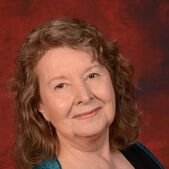
Ruth-Ellen L Miller, Ph.D.
A futurist with degrees in cybernetics, systems science, environmental studies and anthropology, Ruth brings decades of experience in consulting with businesses, government agencies, and nonprofit organizations. She has also contributed significantly in the fields of applied metaphysics and consciousness research. She encourages participatory processes and whole-systems thinking in all areas of life and work, as well as the use of intuitive methods to access Source.
A futurist with degrees in cybernetics, systems science, environmental studies and anthropology, Ruth brings decades of experience in consulting with businesses, government agencies, and nonprofit organizations. She has also contributed significantly in the fields of applied metaphysics and consciousness research. She encourages participatory processes and whole-systems thinking in all areas of life and work, as well as the use of intuitive methods to access Source.